Wednesday, 16 July 2008

Riot in Eastern China

Migrant workers rioted for three days in a town in eastern China in a fresh sign of rumbling social unrest running up to the Beijing Olympics.The protests began on 10 July in Kanmen in the coastal province of Zhejiang. Workers - reportedly angered by a beating meted out to a colleague - attacked a police station for three successive nights. The incident comes just weeks after a 30,000-strong crowd torched dozens of official buildings in Guizhou province.

They were protesting about an alleged cover-up over the death of a teenage girl. Police said the girl committed suicide but her family said she was murdered by the son of a local official. One hundred people have been detained over the Guizhou riots, Chinese state media reported on Monday, including "39 members of local gangs". The incident in Kanmen erupted after a migrant worker was viciously beaten by a security guard, a Hong Kong-based human rights group said.

A crowd surrounded the police station after officers detained the worker, who had gone to file a complaint, the Information Centre for Human Rights and Democracy said, after which three nights of protests and rioting followed. Three hundred military police arrived in the town on Sunday, another local official told the Associated Press news agency. In recent years, more and more reports of local protests have emerged from China. Corruption, land seizures, abuse of power by local officials and the widening gap between rich and poor are the common causes.

Wednesday, 2 July 2008

International unions

SUPPORT SACKED STARBUCKS BARISTAS


On Thursday 24th April, Monica, a barista in the central Seville branch of Starbucks, was fired without notice for creating problems with her workmates. She had worked there for a year and a half. She had been active in organising with the CNT and defending her rights. The store manager told her on several occasions that she must have nothing to do with unions. She is a member of the Commerce Union of the CNT, in Spain. The CNT is demanding her reinstatement.

Barely a month later, in Grand Rapids, Michigan, USA, Starbucks fired
barista Cole Dorsey on June 6th. Cole had over 2 years of service and
was active in the IWW Starbucks Workers Union. The National Labor Relations Board in the US has already made the firm rehire two sacked workers in 2006, and are looking at Starbucks latest violation.

Please come and join us and show Starbucks bosses will not tolerate their union busting.
This is part of an international day of action.
Bring placards, banners, instruments and your mates.

Solidarity Federation and Industrial Workers of the World
www.solfed.org www.iww.org.uk

Clean Clothes


http://www.cleanclothes.org/index.htm

Monday, 23 June 2008

Primark in child labour row

Primark in child labour row
By Edward Harcourt
Last Updated: 12:42am BST 23/06/2008

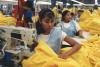
Children as young as 11 from a refugee camp in India were used to make clothes that ended up on the shelves of UK retailer Primark.

The revelations are part of an investigation into Primark's supply chain in India, which will be aired on the BBC's Panorama programme tonight.

The programme will allege that one of Primark's Indian suppliers, Fab-N-Fabrics, used a factory that employed children from the Bhavanisagar refugee camp in the Tamil Nadu region of India.

advertisementThe camp's inhabitants are fleeing war in Sri Lanka. Some of the children are as young as 11 years old, the programme alleges.

There is also a suggestion that other leading UK and European retailers may have similar connections with child labour in their supply chains, though none is named by the programme.

Last week Primark sacked Fab-N-Fabrics and two other sub-contractors allegedly using child labour. The company also ordered an internal investigation and withdrew clothes made by these suppliers from its stores, after it became aware of the BBC investigation.

"We continue to buy from many other good suppliers in the same region and the overall value of our orders will not change as a result of this," the company said.

Chinese Whispers: The true story behind Britain's hidden army of labour, by Hsiao-Hung Pai


Chinese Whispers: The true story behind Britain's hidden army of labour, by Hsiao-Hung Pai

“If you don’t want to do the whole session, you can just buy parts. Three pounds for touching her face and hair, £10 for touching the upper part of her body, £20 for fondling the lower part of her body. Would you like a cup of tea first ?

- a Chinese female housekeeper at a brothel in Cheam , Surrey- February 2007

From brothels in London to a lettuce farm in Sussex and Chinatown kitchens, this courageous and heart-wrenching book documents the super-exploited lives of the army of undocumented Chinese workers living in the UK. Hsiao-Hung Pai goes undercover for the Guardian to expose the secret hell of fear and sweat that exists in a subterranean twilight world .

Everywhere she goes, Hsiao-Hung Pai finds that illegality itself multiplies the misery and that all attempts to improve their lives are doomed as ‘illegal’s’ move from one terrible job to another.

Gangs attack "massage" joints with impunity robbing undocumented workers who have been paid in cash, dishing out example beatings to workers who have done nothing wrong. Waiters earn far below the minimum wage, and invisible labourers fall sick in hellish factories. Exorbitant fees are charged for overcrowded accommodation and essential documentation . Amidst all of this Britain still spurns the UN convention that aims to protect all migrant workers.

Britain is one of the many developed countries that has so far failed to sign up to the 1990 UN International Convention on the Protection of the Rights of all Migrant Workers and Members of their Families, which states that human rights and certain minimum standards of welfare should be extended to all migrant workers, regardless of their legal status.

In Britain, "illegals", as the tabloids call them, have no rights. Contacting the police or accessing the health service are not options as this means deportation-a fact that is used routinely by the gang-masters and agencies. Blocks on giving agency workers equal rights compound the misery.

Cockle pickers drown, people die from exhaustion after working 24-hour shifts on production lines, and families back in china are forced to take on more debt once the existing debt is paid off .Families receive no compensation and the chains of organizations supporting the trade in cheap labour continue to flourish. There's political capital to be made prosecuting gangs bringing illegal immigrants into Britain, but very little to be had protecting the rights of those "illegal’s" once they are here. In fact the expose reveals a carve up between gangmasters , agencies, factories and the government to super- exploit illegal immigrants using the fear of deportation at any time to keep it all in place.

Hsiao-Hung Pai also explains why so many Chinese workers risk their lives to work in Britain, having been driven out of China by economic reforms implemented since it joined the World Trade Organization (nearly five million workers in state-owned factories were made redundant between 2001-2006 in the north-eastern provinces alone); and demonstrates the ways British consumers benefit from their labour.

The book humanizes the workers by relating their own personal stories throughout and there is a concluding chapter on the role of the unions and what direction campaigning organizations ought to take making ‘Chinese Whispers’ an essential book for both trade union activists and anti-sweatshop campaigners.

Peter Burton
563 Words